
Improving Magnetite Concentrate Quality with an Integrated Separation Process
In magnetite beneficiation, improving iron concentrate grade is not always a matter of adding more magnetic separators.
Traditional processes often use several magnetic separators in series. Each machine performs another stage of separation. This approach can make the process longer and increase water and power consumption.
It may also cause the loss of fine magnetic iron during repeated separation.
Another challenge is magnetic agglomeration. Fine gangue, slimes, and low-grade locked particles can become trapped inside magnetic particle chains. They may enter the concentrate together with magnetite.
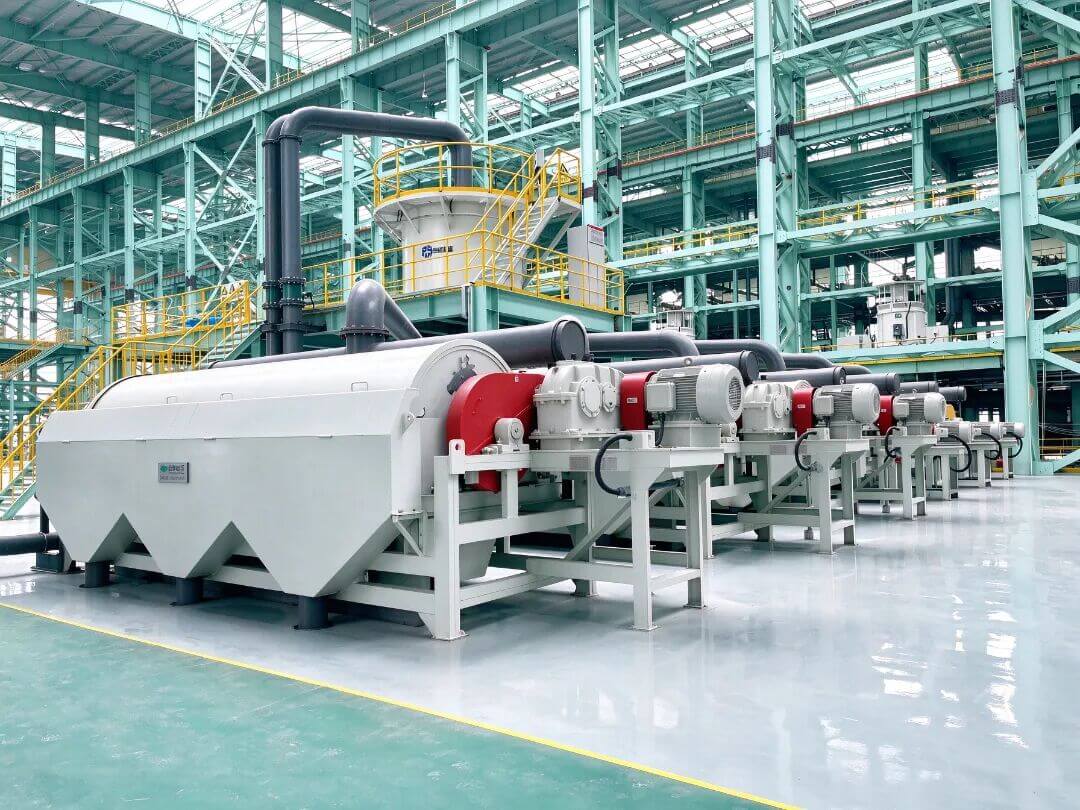
HUATE’s JCTN magnetic separator offers an integrated approach. It combines magnetic separation, magnetic stirring, multi-stage rinsing, and concentrate pre-concentration in one machine.
This design helps remove trapped impurities, improve concentrate quality, and reduce the load on downstream filtration equipment.
1. Why Does Magnetite Concentrate Contain Excessive Impurities?
High impurity content does not always mean that the ore has not been ground fine enough.
In fine-grained magnetite processing, magnetic particles can form chains and clusters under a magnetic field. Fine gangue, slimes, and low-grade locked particles may become trapped inside these clusters.
As a result, unwanted particles can enter the concentrate with magnetic iron.
Common impurities include:
● Silica-bearing gangue.
● Sulfur-bearing and phosphorus-bearing minerals.
● Fine slimes.
● Low-grade locked particles.
Simply adding more grinding or magnetic separation stages may not solve the problem.
The first step is to identify the source of the impurities.
A practical analysis should include:
● Sampling of rough concentrate, final concentrate, and tailings.
● Total iron (TFe) and magnetic iron analysis.
● SiO₂ content testing.
● Particle size distribution analysis.
These tests help determine whether the main problem comes from insufficient liberation or magnetic agglomeration.
2. How Does the JCTN Magnetic Separator Improve Concentration Quality?
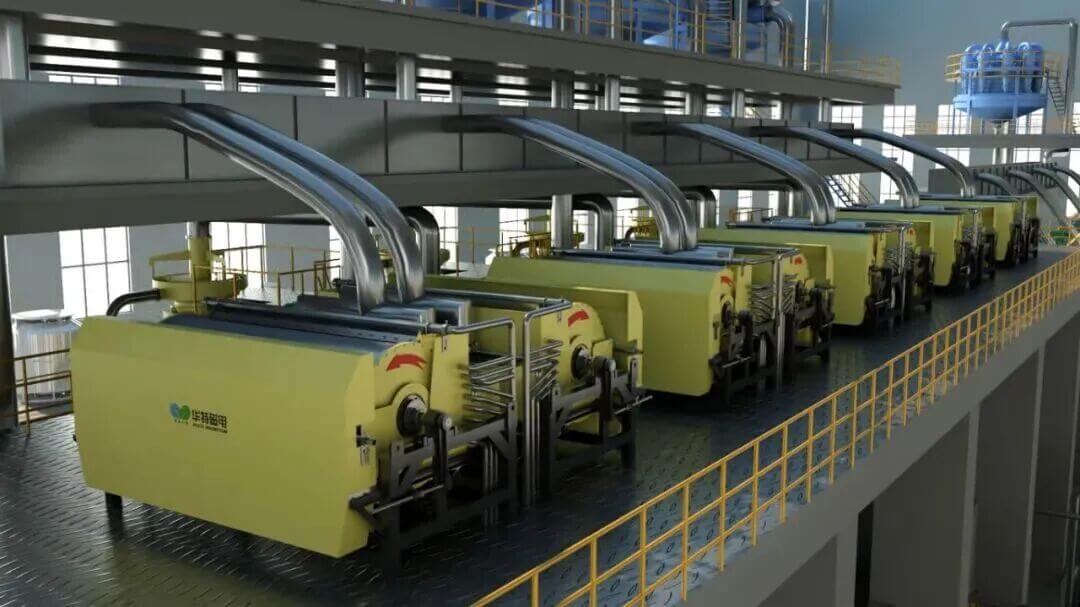
HUATE’s JCTN magnetic separator uses an integrated design to complete several processing steps in one machine.
Its main functions include:
● Magnetic separation.
● Magnetic stirring and agglomerate dispersion.
● Multi-stage rinsing.
● Concentrate pre-concentration.
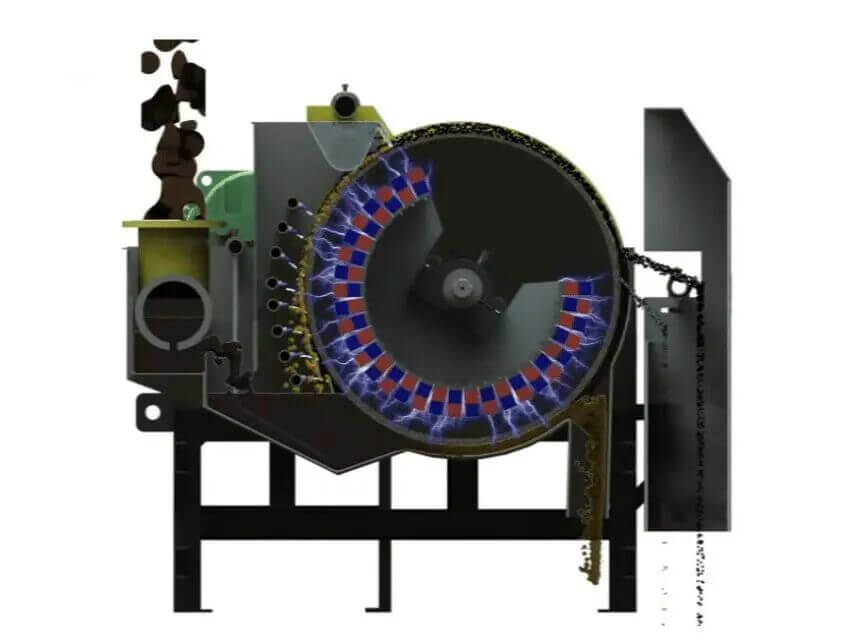
Magnetic Stirring: Breaking Magnetic Agglomerates
Magnetic particles can form clusters that trap non-magnetic impurities.
The built-in alternating magnetic stirring system repeatedly disperses and re-forms magnetic particle groups.
This movement helps release trapped gangue and low-grade locked particles.
Multi-Stage Rinsing: Removing Released Impurities
After magnetic stirring, the released impurities need to be removed.
The JCTN system uses multiple rinsing points and a top water curtain.
These rinsing structures wash away impurities such as silicon-, sulfur-, and phosphorus-bearing materials from the concentrate.
This helps improve concentrate cleanliness and grade.
Large-Wrap-Angle Multi-Pole Magnetic System
The large-wrap-angle magnetic system provides a longer magnetic separation area.
It helps capture magnetic particles and maintain their movement through the separation process.
The magnetic system works together with the drum, magnetic stirring device, and rinsing system.
Concentrate Pre-Concentration
The double-scraper discharge structure removes the concentrate and supports pre-concentration.
This helps increase concentrate density before downstream processing and reduce the load on filtration equipment.
3. One Machine Instead of Multiple Separation Stages
A key feature of the JCTN magnetic separator is its special combination of a downstream tank structure and a counter-rotating drum.
Unlike conventional magnetic separation arrangements, the drum rotates in the opposite direction to the slurry flow.
The machine integrates separation, magnetic stirring, rinsing, and pre-concentration.
This can reduce the need for multiple conventional magnetic separation stages in suitable process flowsheets.
The actual equipment configuration and replacement potential depend on ore properties, feed conditions, and required beneficiation indicators.
4. Key Operating Factors for Better Separation Results
Good equipment performance depends on more than magnetic field strength.
Feed conditions, slurry flow, drum speed, stirring, and rinsing must work together.
Feed Concentration and Flow Rate
An excessively high feed concentration can make the slurry too dense.
This makes it harder for rinsing water to remove impurities from magnetic particle clusters.
An excessively high feed flow rate can also reduce the residence time in the separation zone.
If the feed concentration is too low, the pre-concentration effect may become weaker. Fine magnetic iron may also be lost with the slurry.
During commissioning, operators should record:
● Dry ore throughput.
● Slurry flow rate.
● Feed concentration.
Drum Speed and Magnetic System
Drum speed controls the lifting and conveying rate of magnetic particles.
The magnetic system must capture the magnetic particles effectively and provide enough time for separation and rinsing.
Operators should also inspect:
● Magnetic system alignment and fixing.
● Drum shell wear.
● Magnetic stirring components.
● Rinsing nozzles.
● Scraper and discharge areas.
Rinsing Water Control
Too little rinsing water may leave impurities inside magnetic particle clusters.
Too much water may disturb slurry flow and increase the loss of fine magnetic iron.
Rinsing parameters should be adjusted according to the ore properties and actual operating conditions.
Traditional magnetic separator settings should not be copied directly to the JCTN machine.
5. A Standardized Commissioning Process
A step-by-step commissioning process helps identify problems and avoid unnecessary changes.
HUATE recommends the following sequence:
1. Collect samples from different process points at the same time.
2. Test iron content and particle size distribution.
3. Stabilize feed concentration and flow rate.
4. Check the magnetic system, drum speed, and stirring device.
5. Adjust the multi-stage rinsing parameters.
6. Review continuous shift samples and verify concentrate quality and pre-concentration performance.
Only one operating variable should be changed at a time.
For equipment selection and process modification, the following information should be prepared:
● Ore mineral composition.
● Magnetic iron particle size distribution.
● Feed particle size.
● Slurry concentration.
● Processing capacity.
● Magnetic system configuration.
● Rinsing conditions.
● Three key indicators should be considered together:
● Iron concentrate grade.
● Iron recovery.
● Concentrate density.
6. JCTN Magnetic Separator Application Sites
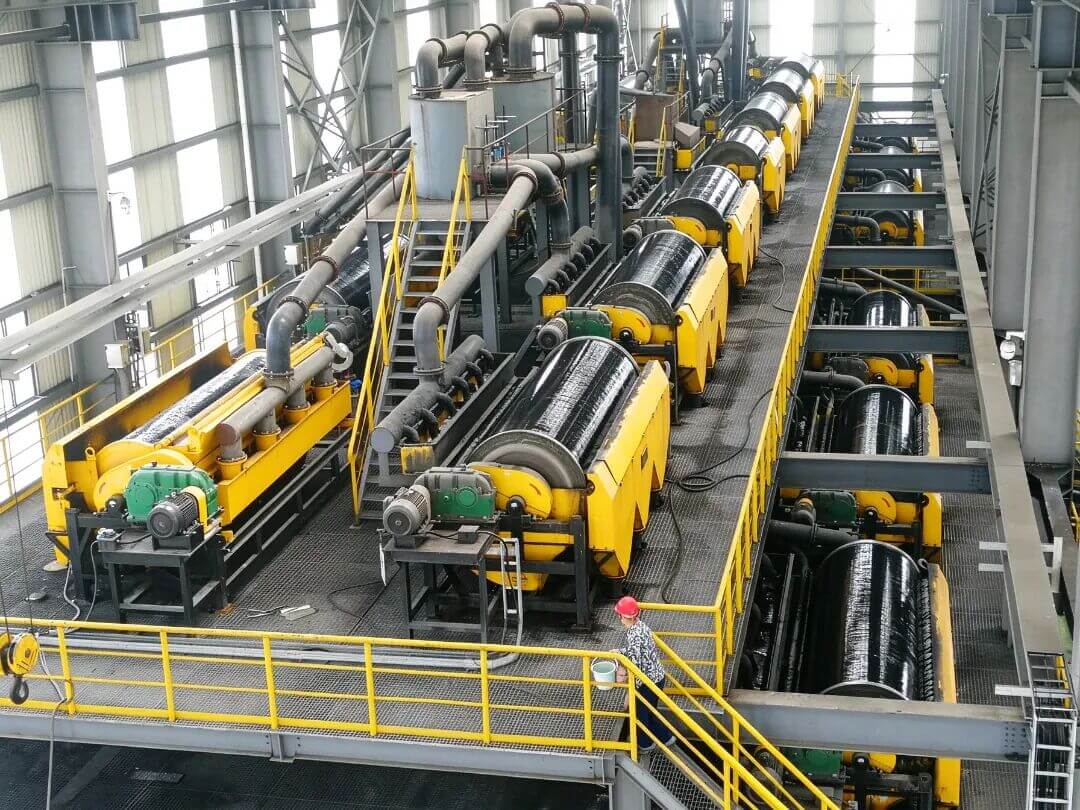
HUATE’s JCTN concentrate upgrading and impurity reduction magnetic separators have been applied at several mining sites.
The application locations shown in the project materials include:
● Shougang Peru Iron Mine – JCTN1545.
● Benxi Longxin Mining – JCTN1550.
● Hongxing Iron & Steel – JCTN 1540
● Subei Bolun Mining – JCTN1550.
● Inner Mongolia Shuangli Mining – JCTN1550.
● Ruyang Molybdenum-Iron Mine, Henan – JCTN1545.
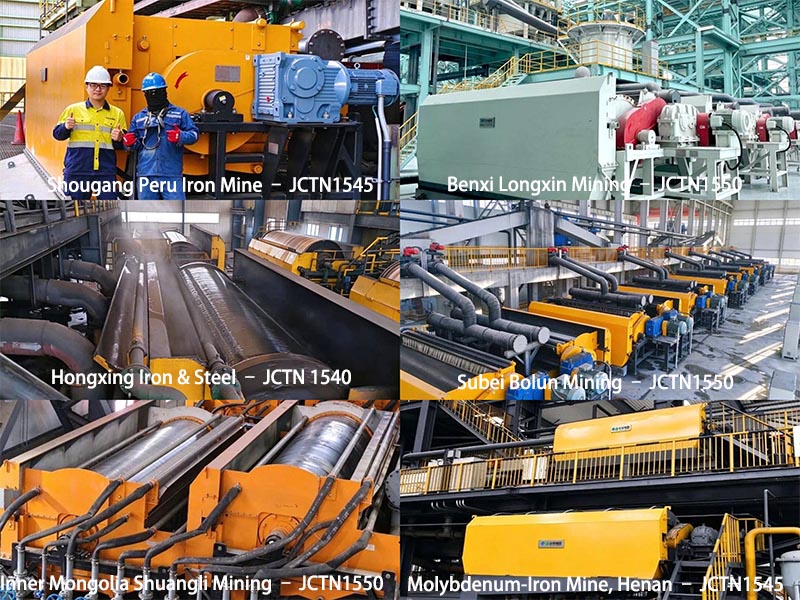
These installations demonstrate the application of JCTN equipment in different magnetite beneficiation settings.
Actual processing results depend on ore characteristics, feed conditions, equipment configuration, and operating parameters.
7. Why Choose HUATE JCTN Magnetic Separation Technology?
The JCTN magnetic separator combines several functions in one machine.
Its main advantages include:
●Integrated processing: Separation, magnetic stirring, rinsing, and pre-concentration in one unit.
●Impurity removal: Magnetic stirring helps release trapped gangue, while multi-stage rinsing removes released impurities.
●Flexible operation: Operating parameters can be adjusted to suit different ore properties.
●Reduced downstream load: Concentrate pre-concentration helps reduce the load on filtration equipment.
●Process simplification: It can replace multiple conventional magnetic separation stages in suitable applications.
HUATE provides magnetic separation equipment and mineral processing solutions for different ore conditions.
Frequently Asked Questions
1. What is a JCTN magnetic separator used for?
A JCTN magnetic separator is a wet magnetic separation machine designed for magnetite concentrate upgrading, purification, desliming, and pre-concentration.
2. How does magnetic stirring improve iron concentrate grade?
Magnetic stirring helps disperse magnetic particle clusters. This releases trapped gangue and low-grade locked particles, making it easier for the rinsing system to remove them.
3. Can one JCTN separator replace multiple conventional magnetic separators?
In suitable process conditions, one JCTN separator can perform separation, magnetic stirring, multi-stage rinsing, and pre-concentration in one unit. Its replacement potential should be confirmed through ore testing and process evaluation.
4. What factors affect JCTN separation performance?
Key factors include ore properties, feed concentration, slurry flow rate, drum speed, magnetic system configuration, magnetic stirring, and rinsing water volume.
5. Is the JCTN magnetic separator suitable for fine-grained magnetite?
It is designed for magnetite rinsing, purification, desliming, and concentration. Its suitability for a specific fine-grained ore should be confirmed through mineralogical analysis and beneficiation tests.
Contact HUATE for Magnetite Beneficiation Solutions
Looking to improve iron concentrate quality, reduce impurities, or optimize your existing magnetic separation process?
Contact HUATE to discuss your ore properties, processing capacity, and beneficiation requirements.
Our team can help evaluate suitable magnetic separation equipment and process configurations for your project.
Post time: Nov-10-2026