
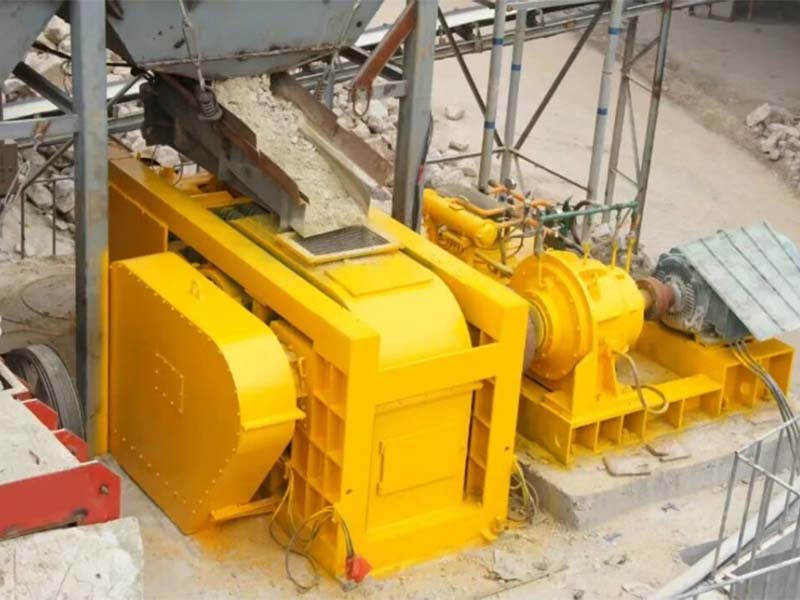
As the mining industry continues to pursue lower energy consumption, higher processing efficiency and more sustainable production, the concept of “more crushing and less grinding” has become an important approach to reducing operating costs.
The High Pressure Grinding Roll (HPGR) uses interparticle compression and bed particle breakage to generate a high proportion of fine material while reducing the energy demand of downstream grinding. As a result, HPGR technology is increasingly being adopted in mineral processing, mining beneficiation and industrial solid waste treatment.
With years of experience in the development and application of HPGR equipment, Shandong Huate Magnet Technology Co., Ltd. has developed high pressure grinding roll solutions for a wide range of materials, including fluorite, steel slag, ilmenite and mixed iron ores.
From long-term industrial applications in China to commercial projects in Southeast Asia, these operating cases demonstrate the potential of HPGR technology in reducing grinding loads, improving energy efficiency and maintaining stable long-term operation.
Long-Term Industrial Performance: HPGR Proven in Multiple Materials
One of the key considerations when selecting a high pressure grinding roll is not only its initial crushing performance, but also its stability under long-term industrial operating conditions.
Huate’s HPGR equipment has been applied to different types of ores and industrial materials, providing practical data for evaluating equipment performance under different working conditions.
1. Fluorite Processing: 10 Years of Stable Operation and 30% Higher Capacity
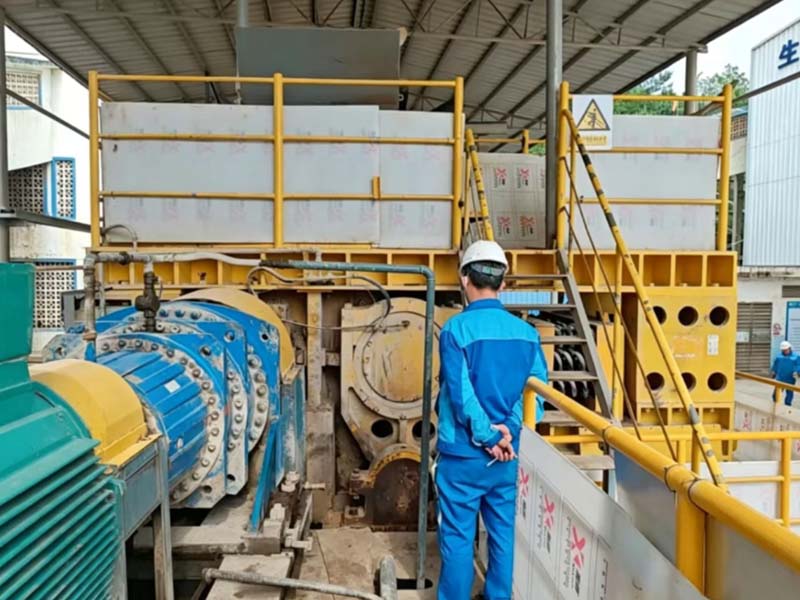
A large fluorite processing plant in China, with an annual processing capacity of approximately 800,000 tonnes, originally used a two-stage crushing circuit consisting of jaw and cone crushers.
Before the HPGR installation, the coarse feed entering the grinding stage limited the throughput of the ball mill. The hourly capacity of a single ball mill was approximately 25 tonnes.
After introducing a Huate HPGR into the crushing circuit, the proportion of material below 10 mm increased from 29.2% to 93.7%, while material below 5 mm reached 70.9%.
As a result, the hourly throughput of a single ball mill increased from approximately 25 tonnes to 40 tonnes, contributing to an overall plant capacity increase of around 30%.
The project also reported a reduction in specific electricity consumption of approximately 40% per tonne of processed material.
The HPGR has now been operating under full-load conditions for approximately 10 years, with routine maintenance required for the roll surface and no reported major unplanned shutdowns during the operating period.
This long-term application demonstrates how HPGR technology can improve feed size distribution and reduce the workload of downstream grinding equipment.
2. Steel Slag Processing: Designed for Highly Abrasive Materials
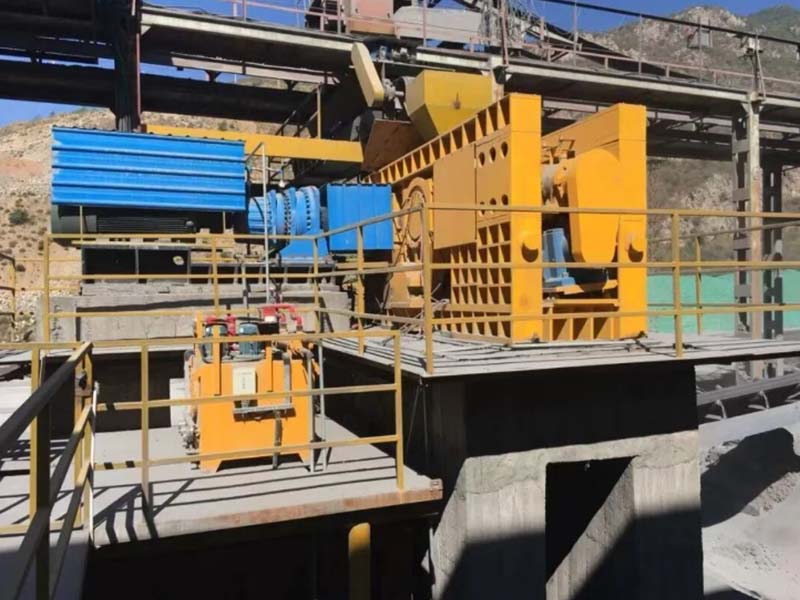
Steel slag presents a different challenge from conventional non-metallic ores.
Its relatively high hardness and abrasive characteristics place significant demands on crushing equipment, particularly the wear resistance of the grinding rolls and the stability of the crushing system.
In one Huate application, steel slag with a feed size of approximately 30–40 mm was processed by an HPGR and reduced to around 8 mm in a single crushing stage.
The resulting product showed a relatively uniform particle size distribution, helping prepare the material for subsequent processing.
The equipment has operated over an extended period with routine maintenance, demonstrating the adaptability of HPGR technology to highly abrasive industrial solid waste materials.
This application also highlights an important advantage of HPGR technology: the same basic crushing principle can be adapted to different feed materials and industrial processing conditions.
3. Ilmenite Processing in Xinjiang: Lower Specific Energy Consumption
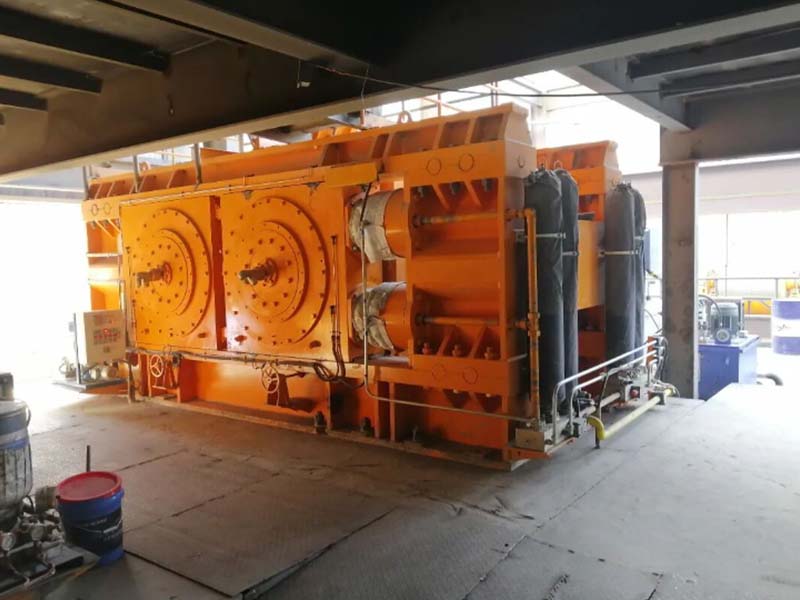
HPGR technology has also been applied to ilmenite processing in Xinjiang, China.
At one processing operation, the original grinding circuit was equipped with four ball mills with a total installed power of approximately 4,200 kW. The reported specific electricity consumption was approximately 10.2 kWh per tonne.
After introducing a Huate HPGM1480 HPGR, the installed power of the HPGR system was approximately 1,260 kW. Under comparable processing conditions, the reported specific electricity consumption decreased to approximately 3.2 kWh per tonne.
This represents a reported reduction of approximately 7 kWh per tonne.
Based on a processing capacity of approximately 8,000 tonnes per day and an electricity price assumption of RMB 0.50/kWh, the theoretical electricity cost saving would be approximately RMB 84,000 per day, or approximately RMB 2.52 million per 30-day month, under those stated assumptions.
The project data illustrates the potential economic value of reducing the energy intensity of the crushing and grinding circuit.
HPGM1480 Application for Ilmenite
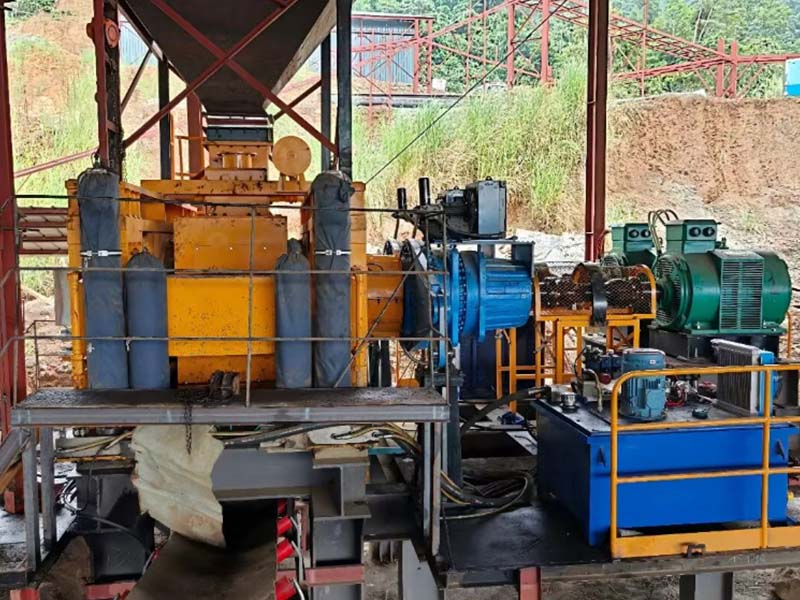
At another ilmenite processing operation in Xinjiang, three HPGM1480 HPGR units were installed.
The reported processing capacity remained stable at approximately 350–410 tonnes per hour per line, while:
· Material below 5 mm reached approximately 88.3%
· Material below 200 mesh reached approximately 38%
· The increased fine fraction reduced the load on downstream grinding equipment
These results demonstrate the potential of HPGR technology to act as an efficient pre-grinding or fine-crushing stage in mineral processing circuits.
4. Southeast Asia: HPGR Application in Mixed Iron Ore Processing
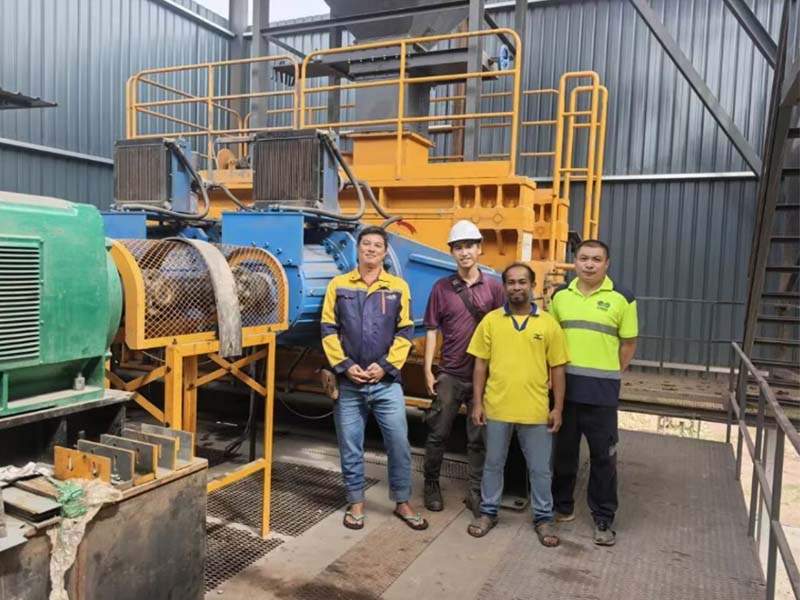
Building on its experience in China, Huate has expanded its HPGR applications into international markets.
In a mining project in Malaysia, three HPGM1250 HPGR units were installed for processing a mixed feed containing hematite and magnetite.
Each machine reportedly achieved a stable processing capacity of approximately 150–200 tonnes per hour, with material below 5 mm accounting for approximately 76% of the product.
The resulting particle size distribution met the project’s requirements for subsequent mineral processing.
Stable Operation Under Variable Mining Conditions
Mining operations in Southeast Asia can involve variable ore characteristics, changing feed conditions and challenging maintenance environments.
For users, equipment maintainability is therefore an important consideration in addition to initial crushing performance.
The Huate HPGR system is designed for relatively straightforward routine maintenance, allowing local operators to carry out regular inspection and maintenance work without relying entirely on professional technical teams.
The Malaysia application has provided practical experience for the international deployment of HPGR equipment and demonstrates the adaptability of the technology to different mineral processing environments.
Why Use HPGR in Mineral Processing?
The above applications show several potential benefits of introducing high pressure grinding rolls into mineral processing circuits.
1. High Proportion of Fine Material
HPGR uses high-pressure compression between opposing rolls to break particles through interparticle crushing.
This mechanism can generate a high proportion of fine material compared with conventional crushing methods, helping reduce the feed size and grinding load for downstream equipment.
2. Reduced Downstream Grinding Load
By producing a finer feed before the grinding stage, HPGR can help reduce the workload of ball mills and other downstream grinding equipment.
The actual benefit depends on ore properties, circuit configuration, feed size and target product size.
3. Potential Energy Savings
Grinding is one of the major energy-consuming stages in many mineral processing plants.
By shifting part of the size-reduction duty from conventional grinding to high-pressure crushing, HPGR circuits can potentially reduce specific energy consumption.
Actual energy savings should be evaluated using site-specific process data and comparable operating conditions.
4. Adaptability to Different Materials
Huate HPGR applications cover a range of materials, including:
· Fluorite
· Ilmenite
· Hematite
· Magnetite
· Mixed iron ore
· Steel slag
This range of applications demonstrates the potential of HPGR technology beyond a single mineral or processing route.
5. Suitable for New Plants and Existing Circuit Upgrades
HPGR technology can be considered for both new mineral processing plants and the modernization of existing crushing and grinding circuits.
For existing operations, HPGR may be integrated into the crushing circuit to improve feed preparation and reduce the burden on downstream grinding equipment.
The final circuit configuration should be determined according to the material properties, required throughput, product size and existing equipment.
From China to Southeast Asia: Industrial Data Behind HPGR Performance
The value of an HPGR machine should ultimately be evaluated through actual industrial operating conditions rather than laboratory performance alone.
Huate’s application experience covers different materials, regions and operating environments:
|
Material |
Application |
Equipment |
Key Reported Result |
| Fluorite | China | Huate HPGR | 10-year operation; plant capacity increased approximately 30% |
| Steel slag | China | Huate HPGR | 30–40 mm feed reduced to approximately 8 mm |
| Ilmenite | Xinjiang, China | HPGM1480 | Specific energy consumption reduced from 10.2 to 3.2 kWh/t in the reported case |
| Ilmenite | Xinjiang, China | 3 × HPGM1480 | 350–410 t/h reported capacity per unit |
| Mixed iron ore | Malaysia | 3 × HPGM1250 | 150–200 t/h per unit; <5 mm fraction approximately 76% |
Note: Reported performance values are based on individual industrial applications and operating conditions. Actual results may vary depending on feed characteristics, circuit configuration, moisture, throughput and product size requirements.
HPGR for More Efficient and Sustainable Mining
As mining companies continue to pursue energy efficiency and lower-carbon production, improving the efficiency of size reduction remains an important area for process optimization.
By combining high-pressure interparticle crushing with optimized downstream grinding, HPGR technology can help mineral processing plants improve particle size distribution, reduce grinding requirements and potentially lower energy consumption.
For operations processing fluorite, ilmenite, iron ore, steel slag and other suitable materials, HPGR can be evaluated as part of a new processing circuit or as an upgrade to an existing crushing and grinding system.
From long-term fluorite and steel slag applications in China to ilmenite projects in Xinjiang and mixed iron ore processing in Malaysia, Huate continues to develop HPGR solutions based on real industrial operating experience.
Shandong Huate Magnet Technology Co., Ltd. continues to focus on the development of mineral processing and grinding equipment, providing HPGR solutions and integrated equipment for mining and industrial applications worldwide.
For specific ore characteristics, capacity requirements and target particle size, contact Huate for an application-specific HPGR solution.
About Huate Magnet
Shandong Huate Magnet Technology Co., Ltd. has been engaged in the development of magnetic separation, mineral processing and related equipment for more than 30 years.
With experience in both domestic and international projects, Huate provides equipment and integrated solutions for mineral processing, mining, industrial solid waste treatment and other applications.
Looking for an HPGR Solution for Your Ore? Share your feed material, feed size, required capacity and target product size with our technical team. Huate can evaluate a suitable HPGR configuration based on your processing requirements.
Post time: Sep-24-2026