
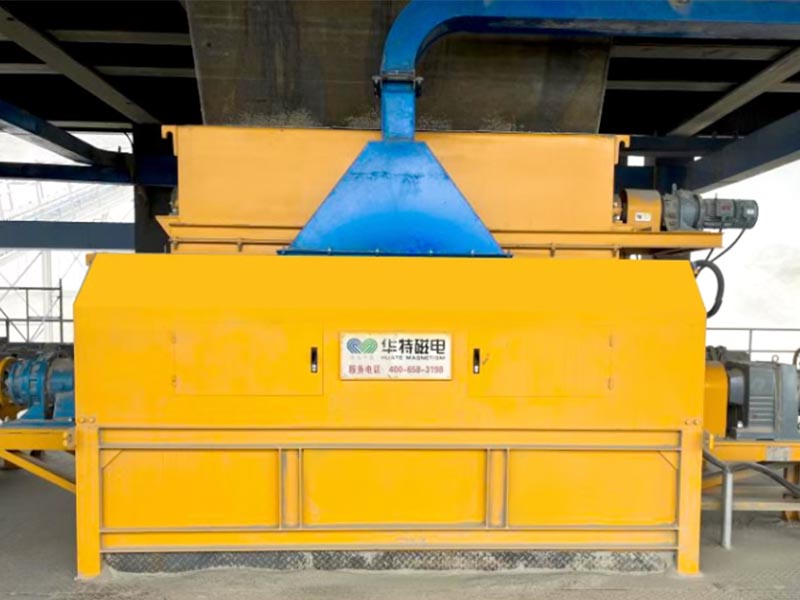
Improving Ilmenite Beneficiation Efficiency Through Dry Magnetic Separation
Titanium-bearing minerals are important raw materials for a wide range of industrial applications. However, processing low-grade ilmenite ore can be challenging because valuable titanium minerals are often associated with gangue and low-grade composite particles. Removing waste material at an early stage can help reduce the amount of ore entering downstream processing and improve the efficiency of the overall beneficiation flowsheet.
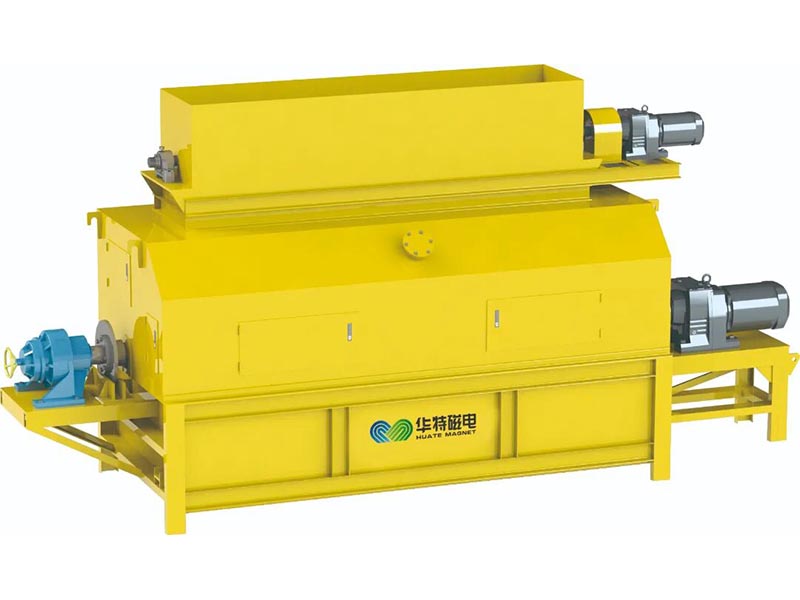
Huate’s TCY dry high-intensity magnetic separator is designed for the dry pre-concentration of low-grade ilmenite and other minerals with differences in magnetic susceptibility. With a drum surface peak magnetic field strength of up to 10,000 Gs, a multi-pole permanent magnet system and a uniform feeding design, the equipment provides a dry separation option for suitable titanium-bearing ores with a feed particle size of up to 3 mm.
By separating magnetic titanium-bearing particles from non-magnetic gangue and low-grade composite particles, the TCY separator can help upgrade the feed material before subsequent processing. As a dry process, it does not require process water during the magnetic separation stage, making it a potential option for water-scarce mining areas and dry-grinding circuits.
Why Is Dry Pre-Concentration Important for Ilmenite?
The beneficiation performance of ilmenite depends on ore mineralogy, particle size, liberation characteristics and the magnetic properties of the valuable minerals and associated gangue.
When low-grade ore contains a substantial proportion of waste rock or low-value composite particles, processing all the feed through subsequent stages may increase the material-handling and processing burden. Dry pre-concentration provides an opportunity to reject part of this material before further beneficiation.
Potential advantages of an appropriate dry pre-concentration process include:
● Early waste rejection: Remove suitable non-magnetic gangue and low-grade composite particles before downstream processing.
● Improved feed grade: Increase the TiO₂ grade of the retained product when the ore’s mineralogical and magnetic characteristics are suitable.
● Reduced process-water demand: Perform the magnetic separation stage without process water.
● Integration with dry processing circuits: Combine dry magnetic separation with suitable crushing, grinding and other pre-concentration equipment.
● Flexible process configuration: Use the separator independently or integrate it with other beneficiation equipment according to ore characteristics and test results.
Actual separation performance depends on the feed composition, particle size distribution, mineral liberation, moisture content and operating parameters. Ore testing is recommended before selecting an industrial process.
Huate TCY Dry High-Intensity Magnetic Separator
The TCY dry high-intensity magnetic separator was developed by Huate for dry pre-concentration of titanium-bearing ores and other minerals with differences in magnetic susceptibility.
Its principal design features include a high-intensity multi-pole magnete permanente system, uniform material distribution, an adjustable magnetic system and a wear-resistant drum structure.
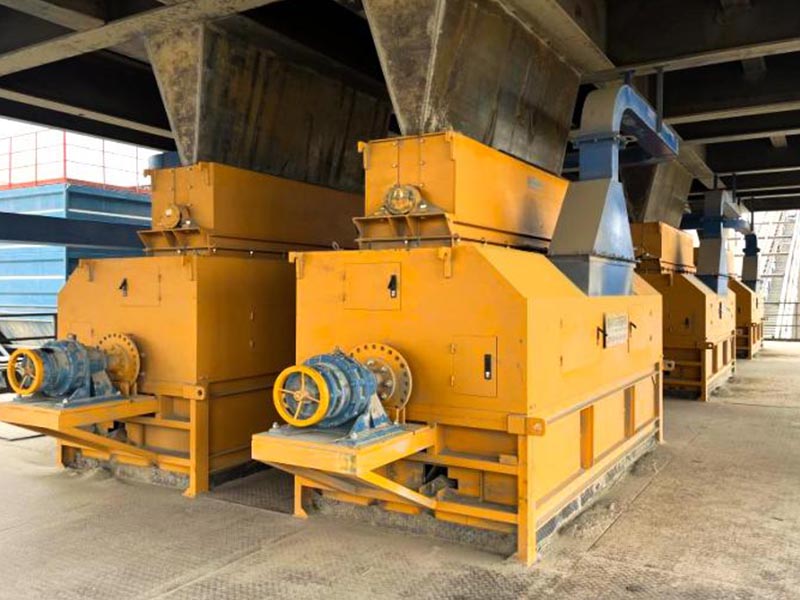
Key Technical Features
1. High-intensity multi-pole magnetic system
The separator uses high-energy-product NdFeB permanent magnets arranged in alternating north and south poles around the drum. The drum surface peak magnetic field strength can reach 10,000 Gs.
As particles move through the magnetic field, repeated changes in magnetic pole orientation promote the separation of suitable magnetic particles from associated non-magnetic material.
2. Uniform feeding system
A star-shaped feeding device and an extended vibrating feeder help distribute dry ore evenly across the drum surface. Uniform feeding reduces material accumulation and overlapping layers, supporting more stable separation.
3. Adjustable magnetic system
A geared adjustment mechanism allows the magnetic system’s working position to be adjusted to suit different ore characteristics and separation requirements.
4. Low-loss drum design
The separator uses a non-metallic, wear-resistant insulating drum material to avoid the eddy-current heating associated with conductive metallic drum structures under changing magnetic fields. Wear-resistant ceramic protective plates are installed on the drum surface to improve resistance to impact and abrasion.
5. Multiple mineral applications
In addition to suitable titanium-bearing ores, the equipment can be considered for dry separation of minerals such as chromite, garnet, monazite and quartz where differences in magnetic susceptibility allow effective separation.
Working Principle of the TCY Dry Magnetic Separator
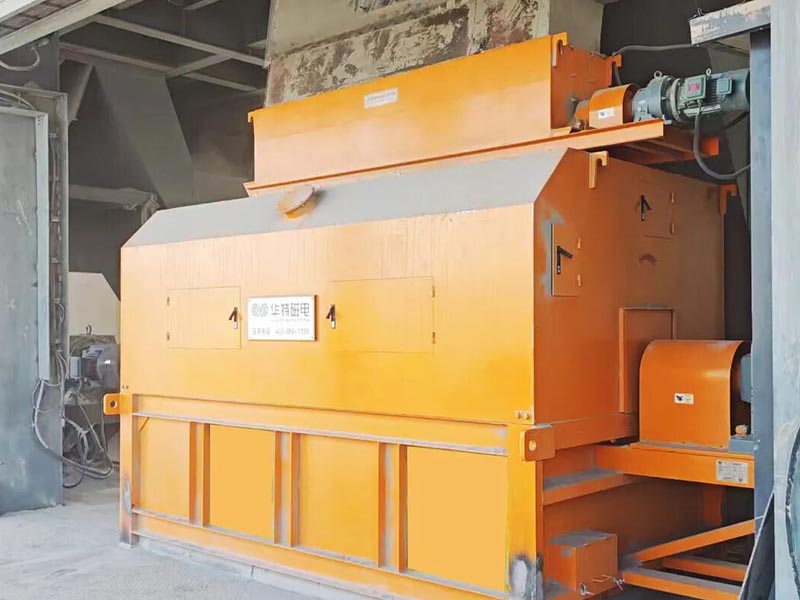
The TCY separator uses differences in magnetic susceptibility to separate suitable magnetic mineral particles from non-magnetic gangue in dry ore.
Step 1: Uniform Feeding
After suitable crushing and grinding, dry ore is delivered through the star-shaped feeding device and vibrating feeder. The material is distributed evenly across the surface of the rotating separation drum.
Step 2: Magnetic Attraction
The multi-pole permanent magnet system inside the drum generates a high-intensity magnetic field. Susceptible titanium-bearing particles, including suitable ilmenite or titanomagnetite particles, are attracted toward the drum surface and carried along with its rotation.
Step 3: Repeated Separation
As the particles pass through alternating magnetic poles, repeated changes in the magnetic field help loosen associated non-magnetic gangue and low-grade composite particles. The effectiveness of this process depends on the ore’s mineralogical characteristics and degree of liberation.
Step 4: Separate Product Discharge
When the magnetic particles reach the non-magnetic discharge zone, the magnetic attraction decreases and the retained particles fall into the concentrate collection area under gravity. Non-magnetic gangue and rejected composite particles follow a different discharge path, allowing the feed to be divided into separate products.
The resulting pre-concentrated material can then be evaluated for further beneficiation according to the required concentrate grade and recovery.
Industrial Application Case 1
Ilmenite Pre-Concentration in Xinjiang, China
A titanium-bearing ore project in Xinjiang, China, adopted a process combining crushing, high-pressure grinding and dry magnetic separation.
The beneficiation circuit used Huate’s FCX high-frequency pulsating powder ore air magnetic separator together with the TCY dry high-intensity titanium pre-concentration separator.
The TCY-related titanium pre-concentration results were as follows:
| Product | Yield (%) | MFe (%) | Recovery (%) | TiO₂ (%) | TiO₂ Recovery (%) | TFe (%) | TFe Recovery (%) |
|---|---|---|---|---|---|---|---|
| Concentrate | 32.26 | 2.69 | 83.67 | 8.67 | 80.50 | 13.61 | 58.02 |
| Tailings | 67.74 | 0.25 | 16.33 | 1.00 | 19.50 | 4.69 | 41.98 |
| Feed | 100.00 | 1.04 | 100.00 | 3.47 | 100.00 | 7.57 | 100.00 |
The reported results show that the TiO₂ grade increased from 3.47% in the feed to 8.67% in the concentrate, while the reported concentrate TiO₂ recovery was 80.50%.
|
Parameter |
Reported Result |
| Feed TiO₂ grade | 3.47% |
| Concentrate TiO₂ grade | 8.67% |
| Tailings TiO₂ grade | 1.00% |
| Concentrate TiO₂ recovery | 80.50% |
This case demonstrates the potential of combining dry magnetic separation equipment in a staged beneficiation flowsheet to upgrade suitable low-grade titanium-bearing material. Results from other ores may differ according to feed properties and process conditions.
Industrial Application Case 2
Dry Pre-Concentration of Difficult-to-Separate Ilmenite Ore in Shandong, China
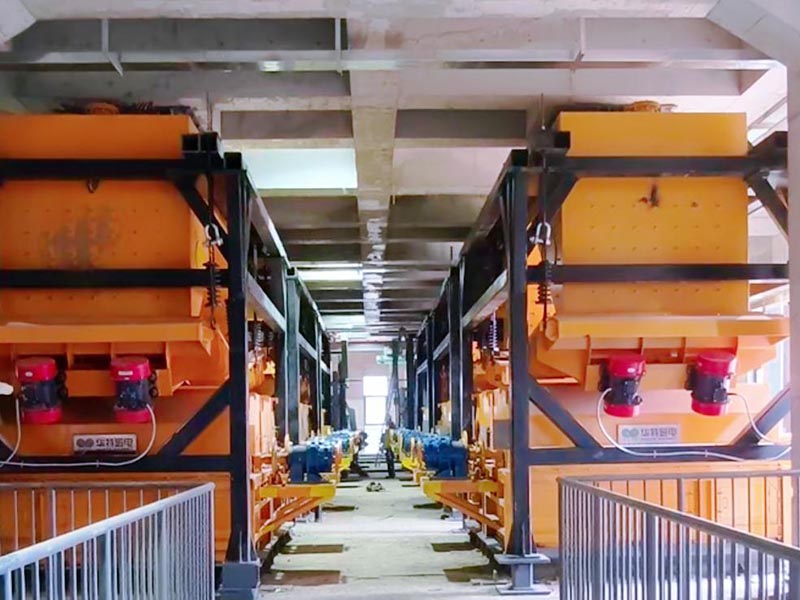
A second application involved difficult-to-separate ilmenite ore in Shandong Province, China. The feed particle size was reported as below 5 mm.
The reported mineral composition was approximately 40% ilmenite, 40% titanite (CaTiSiO₅) and 20% calcium silicate minerals. Because titanite is non-magnetic, the mineralogical composition presented a challenge for magnetic separation.
The reported test results were:
| Product | TiO₂ (%) | Yield (%) | TiO₂ Recovery (%) |
|---|---|---|---|
| Concentrate | 7.04 | 70.62 | 76.84 |
| Tailings | 5.10 | 29.38 | 23.16 |
| Feed | 6.47 | 100.00 | 100.00 |
The source material reports a TiO₂ yield of 71.04% and waste rejection approaching 30%.
|
Parameter |
Reported Result |
| Feed TiO₂ grade | 6.47% |
| Concentrate TiO₂ grade | 7.04% |
| Tailings TiO₂ grade | 5.10% |
| Reported TiO₂ yield | 71.04% |
| Reported waste rejection | Nearly 30% |
This case illustrates why ore mineralogy and test conditions are important when evaluating dry pre-concentration. Even when the ore contains a substantial proportion of non-magnetic minerals, the separation route must be assessed against the actual mineral composition, liberation characteristics and target product requirements.
How to Evaluate a Dry Pre-Concentration Flowsheet
Selecting a dry magnetic separator requires more than comparing the nominal magnetic field strength of different machines. A practical evaluation should consider:
Feed particle size: Confirm that the feed is within the selected equipment’s recommended size range.
Mineralogical composition: Identify the titanium-bearing minerals and the magnetic properties of associated gangue.
Liberation characteristics: Determine whether valuable minerals can be separated effectively at the selected particle size.
Moisture and material flow: Confirm that the feed can be distributed evenly under dry operating conditions.
Target concentrate grade and recovery: Define the required product quality and acceptable losses of valuable minerals.
Downstream process requirements: Evaluate how the pre-concentrated product will fit into the complete beneficiation flowsheet.
For the TCY series, the stated design application is dry pre-concentration of suitable low-grade ores with particle sizes up to 3 mm. The Shandong case described above used a reported feed size below 5 mm; this project-specific figure should not be interpreted as a universal equipment specification. The applicable model and feed-size limits should be confirmed with Huate based on the actual ore and process configuration.
Conclusion
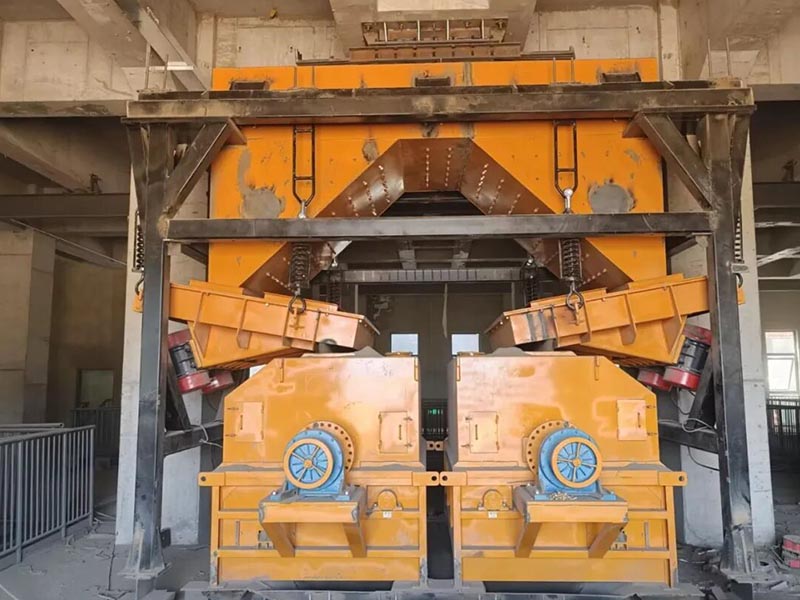
Dry pre-concentration can provide a useful way to reject suitable waste material and upgrade low-grade titanium-bearing ores before downstream processing. Huate’s TCY dry high-intensity magnetic separator combines a multi-pole permanent magnet system, uniform feeding, an adjustable magnetic system and a wear-resistant non-metallic drum design for dry mineral separation.
The reported Xinjiang application increased TiO₂ grade from 3.47% to 8.67%, with a reported concentrate TiO₂ recovery of 80.50%. The Shandong application reported nearly 30% waste rejection under its specific ore and test conditions.
For mining operations seeking to evaluate dry ilmenite pre-concentration, equipment selection should be based on representative ore samples, particle-size requirements, mineralogical analysis and test results. Huate can be contacted to discuss the suitability of the TCY separator for a specific beneficiation project.
Contact Huate Magnet to discuss your ilmenite pre-concentration requirements and dry magnetic separation options.
Post time: Oct-13-2026