
Copper is one of the most important industrial metals, widely used in power transmission, advanced manufacturing, renewable energy, transportation and infrastructure. Among the many copper-bearing minerals found in nature, chalcopyrite (CuFeS₂) is one of the most important sources of copper for industrial production. Chalcopyrite is widely distributed and commonly occurs in complex ore deposits together with pyrite, pyrrhotite, quartz, calcite, molybdenite, galena and sphalerite. Because calcopirita are often characterized by relatively low grades, fine dissemination and complex mineral associations, efficient chalcopyrite beneficiation is essential for recovering copper minerals and producing a qualified copper concentrate. Understanding the mineralogical properties of chalcopyrite and selecting appropriate mineral processing technologies are therefore important steps in improving copper recovery and overall resource utilization.
1. What is Chalcopyrite?
Chalcopyrite is a copper-iron sulfide mineral with the chemical formula CuFeS₂. It belongs to the tetragonal crystal system and commonly occurs in massive, granular or disseminated aggregates rather than as complete individual crystal chalcopyrite. Pure chalcopyrite theoretically contains approximately 34.63% copper, 30.43% iron and 34.94% sulfur. This composition makes it an important source of copper as well as a potential source of associated valuable elements. Fresh chalcopyrite typically has a distinctive brass-yellow to golden-yellow color and a metallic luster. Weathered surfaces may develop brown, blue or purple tarnish. Although its appearance can resemble gold, chalcopyrite is more brittle and can be distinguished from gold by its physical properties. Chalcopyrite has a Mohs hardness of approximately 3.0–4.0 and a specific gravity of about 4.1–4.3 g/cm³. Its density differs significantly from common gangue minerals such as quartz and feldspar, providing a physical basis for certain mineral separation processes. An important characteristic for mineral processing is that chalcopyrite itself is non-magnetic. However, chalcopyrite ores may contain magnetic minerals such as pyrrhotite and magnetite. This difference in magnetic properties makes magnetic separation useful as an auxiliary process for removing magnetic impurities from certain copper ores. Chalcopyrite can also occur with valuable associated elements such as gold, silver, molybdenum, selenium and tellurium. Recovering these associated components can further improve the overall economic value of a copper ore deposit.
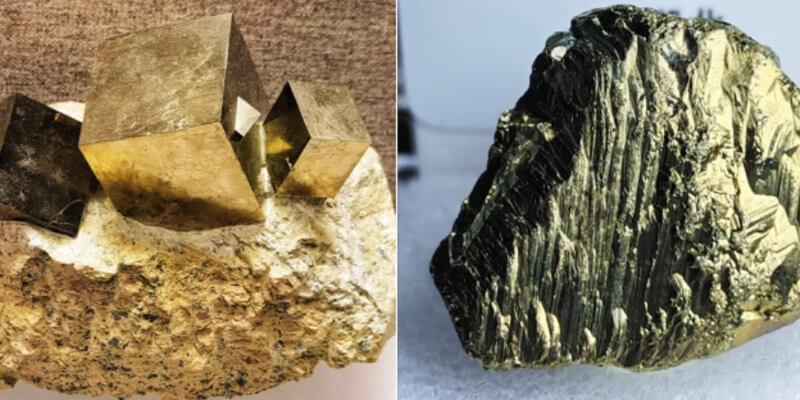
2. Chalcopyrite Formation and Resource Distribution
Chalcopyrite deposits can form through several geological processes, including magmatic segregation, hydrothermal activity and contact metasomatism. Hydrothermal deposits are among the most common types. Copper-, iron- and sulfur-bearing hydrothermal fluids migrate through fractures in surrounding rocks and precipitate to form chalcopyrite-bearing veins and disseminated mineralization. Chalcopyrite is widely distributed in major copper-producing regions around the world. Important copper resource countries include Chile, Peru, Australia, China and the United States. Chalcopyrite deposits may occur as relatively low-grade ores and frequently contain multiple associated minerals. In many deposits, copper minerals are closely intergrown with pyrite, pyrrhotite and gangue minerals. Such complex mineralogy increases the difficulty of mineral processing and creates a need for carefully designed mineral processing flowsheets.
3. Industrial Applications and Resource Value of Chalcopyrite
The primary industrial value of chalcopyrite lies in its role as an important source of copper. After beneficiation and metallurgical processing, copper can be used to manufacture electrical wires, cables, transformers, motors and power transmission equipment because of its excellent electrical and thermal conductivity. Copper is also an important material for renewable energy applications, including photovoltaic systems, wind power equipment, energy storage systems and electric transportation. Beyond copper recovery, chalcopyrite ores may contain valuable associated elements such as iron, sulfur, gold, silver and molybdenum. Depending on the mineralogy of the deposit, comprehensive recovery of these components can increase resource utilization and improve the economic performance of a mining operation. Therefore, modern copper ore processing increasingly focuses not only on copper recovery but also on the comprehensive utilization of associated valuable minerals.
Moreover, with their perfect crystallization and brilliant luster, chalcopyrite crystals—characterized by a distinctive metallic sheen and well-defined forms—serve as excellent specimens for mineral collections and geological research, offering both educational and collectible value. 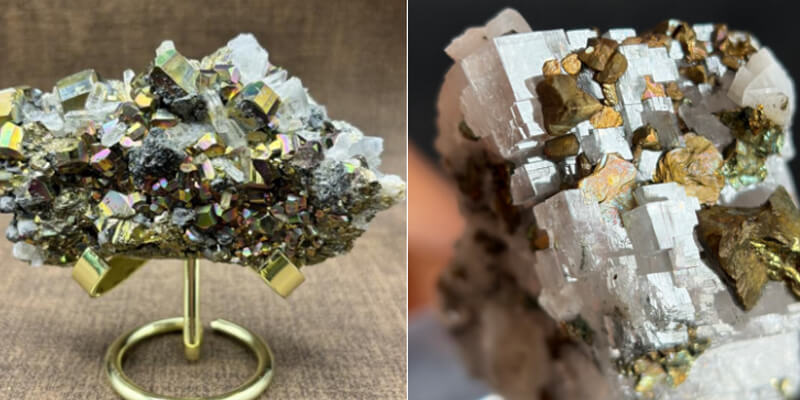
4. Chalcopyrite Mineral Processing
Natural chalcopyrite ore commonly contains gangue minerals and associated sulfide minerals. It generally requires beneficiation before further metallurgical processing. The selection of a chalcopyrite mineral process depends on factors such as ore grade, mineral composition, particle size, degree of liberation and the characteristics of associated minerals.
- Flotat mining
- Gravity separation
- Magnet separating
- Combined mineral processing
Among these methods, flotation is generally the principal process for processing complex and finely disseminated sulfide copper ores.
4.1 Flotation : A Major Method for Chalcopyrite
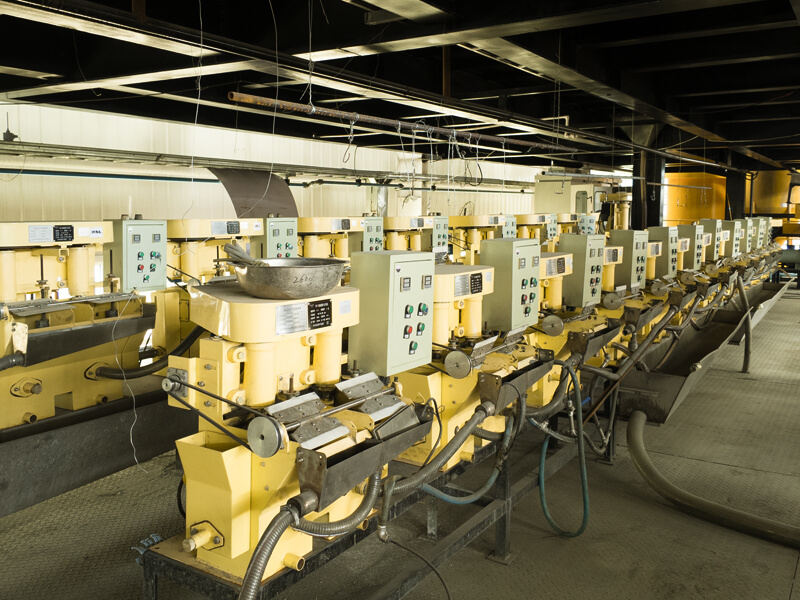
Flotation is one of the most widely used methods for copper ore beneficiation, particularly for finely disseminated and polymetallic sulfide ores. Flotation process is the optimal separation process for the characteristics of chalcopyrite ores, it is particularly well-suited for complex ores featuring fine-grained dissemination and polymetallic associations. Offering high separation precision, high recovery rates, and strong adaptability, it stands as the most mature and widely applied technology in industrial production. Its core principle relies on the excellent natural hydrophobicity of chalcopyrite: freshly exposed chalcopyrite surfaces are hydrophobic, allowing the particles to stably attach to air bubbles and float, whereas hydrophilic gangue minerals—such as quartz and calcite—sink. For chalcopyrite ores associated with pyrite or molybdenite, the flotation flowsheet can be adjusted according to the specific mineralogical characteristics of the ore. For example, copper-molybdenum ores may use a combined copper-molybdenum flotation stage followed by copper-molybdenum separation. For low-grade and fine-grained ores, staged or closed-circuit flotation can be used to improve the recovery of fine valuable minerals. The actual flotation process should be determined through mineralogical analysis and beneficiation testing rather than applying a fixed process to every deposit.
4.2 Gravity Separation: Pre-Concentration for Coarse Chalcopyrite
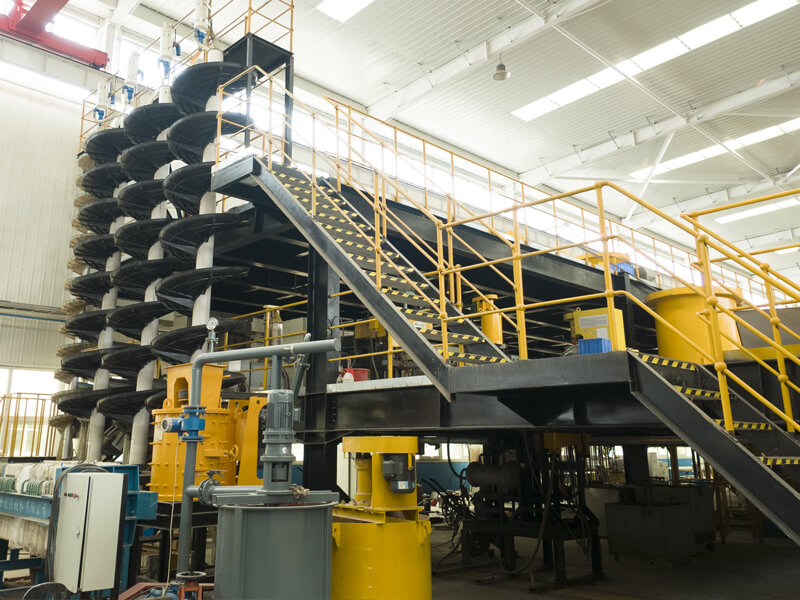
Gravity separation utilizes differences in mineral density to achieve physical separation. With a specific gravity of approximately 4.1–4.3 g/cm³, chalcopyrite is considerably denser than common gangue minerals such as quartz and calcite. This density difference can provide favorable conditions for gravity separation when the ore contains relatively coarse particles and good mineral liberation. Gravity separation equipment may include:
- Jig concentrators
- Shaking tables
- Dense-medium separators
Gravity separation can be used as a pre-concentration step to recover coarse liberated valuable minerals and reduce the processing load of subsequent flotation. However, its effectiveness decreases significantly for fine-grained chalcopyrite and ores in which chalcopyrite is closely intergrown with other sulfide minerals. Therefore, gravity separation is generally more suitable as part of a combined mineral processing rather than as the sole separation method for complex chalcopyrite ores.
4.3 Magnetic Separation: Removing Magnetic Impurities
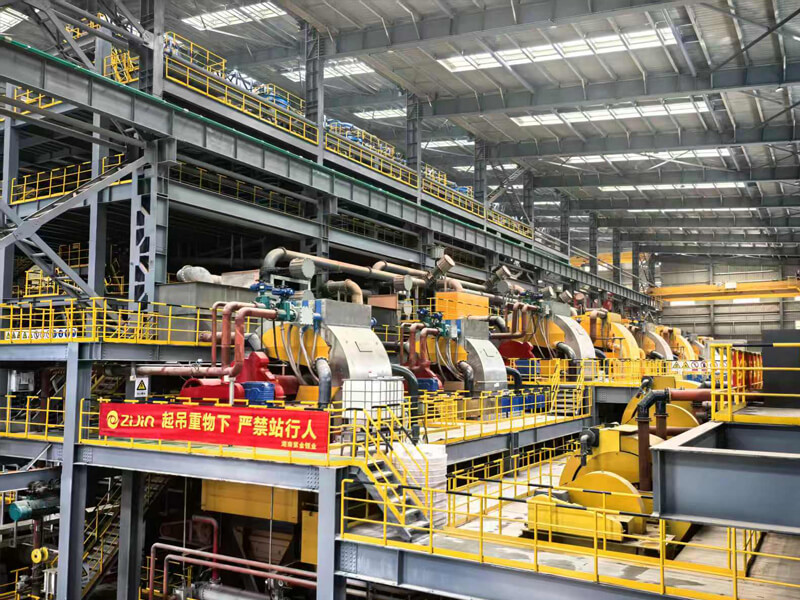
Although chalcopyrite itself is non-magnetic, magnetic separation can play an important auxiliary role in certain copper ore processing applications. Chalcopyrite ores may contain magnetic minerals such as pyrrhotite, magnetite and iron oxides. These unwanted magnetic minerals can affect concentrate quality and interfere with downstream processing. Magnetic separation takes advantage of the difference in magnetic properties between chalcopyrite and magnetic impurities. Depending on the mineralogy and processing requirements, magnetic separation can be incorporated before or after flotation. When applied before flotation, magnetic separation can remove magnetic impurities and improve the conditions for subsequent flotation. When applied after flotation, it can help reduce residual magnetic impurities in the copper concentrate. For weakly magnetic fine particles, high-gradient magnetic separation technologies can provide additional separation options. Huate’s mineral processing technology portfolio includes high-gradient magnetic separation, flotation and gravity separation equipment for complex mineral processing applications.
5. Combined Beneficiation Processes for Complex Chalcopyrite Ores
As easily processed high-grade resources become less available, copper mines increasingly need to process low-grade, fine-grained and polymetallic ores. A single beneficiation method may not provide sufficient recovery and concentrate quality for these complex ores. As a result, combined mineral processing are increasingly important.
Gravity Separation + Flotation
A gravity-flotation flowsheet can be considered for ores containing both coarse liberated chalcopyrite and fine-grained valuable minerals. The gravity stage can recover coarse valuable minerals and remove part of the gangue before flotation. The remaining material can then be reground and processed through flotation to recover finer particles. This combination can help reduce the load on the flotation circuit and improve overall resource recovery when the ore characteristics are suitable.
Magnetic Separation + Flotation
Magnetic separation followed by flotation may be considered for chalcopyrite ores containing significant amounts of magnetic impurities. Magnetic separation can remove magnetite, pyrrhotite or other magnetic components before flotation, helping to create more favorable conditions for subsequent copper mineral separation. The appropriate magnetic separation equipment and operating parameters depend on the magnetic properties, particle size and mineralogical composition of the ore.
Comprehensive Recovery of Associated Minerals
Modern mineral processing increasingly emphasizes comprehensive resource utilization. For chalcopyrite ores containing valuable gold, silver, molybdenum or other associated elements, mineral processing flowsheets can be designed to recover multiple valuable components where economically and technically feasible. This approach helps maximize the value of the mineral resource while supporting more efficient and sustainable mining operations.
6. Industrial Magnetic Separators and Mineral Processing Equipment
The selection of industrial magnetic separators depends on the magnetic properties, particle size, processing capacity and mineral composition of the feed material. Different mineral processing applications may require different magnetic field intensities and separation configurations. For fine weakly magnetic particles, high-gradient magnetic separation can provide an additional option for removing fine magnetic impurities. When developing a complete beneficiation flowsheet, magnetic separators should not be considered independently from other equipment. A complete mineral processing equipment system may include:
- Crushing equipment
- Grinding mills
- Classification equipment
- Gravity separation equipment
- Magnetic separators
- Flotation equipment
- Concentration equipment
- Dewatering equipment
The appropriate equipment combination should be determined according to the mineralogical characteristics and processing test results of the specific ore. For mining projects requiring multiple separation stages, a magnetic separation machine for mining and ore processing equipment can be incorporated into a broader mineral processing circuit where magnetic separation is technically appropriate.
7. The Future of Chalcopyrite Beneficiation
The increasing proportion of low-grade and complex copper ores is driving the development of more efficient mineral processing technologies. Future chalcopyrite mineral processing is expected to focus on:
- More precise mineral separation
- Improved recovery of fine-grained minerals
- Lower reagent consumption
- Better comprehensive recovery of associated minerals
- More efficient water and energy utilization
- Intelligent process control and mineral sorting
- Integration of multiple beneficiation technologies
For complex ores, the combination of flotation, gravity separation, magnetic separation and other advanced separation technologies can provide more flexible solutions than relying on a single process. Huate has established mineral processing test capabilities covering crushing, grinding, classification, magnetic separation, gravity separation, flotation, dehydration and other stages. Its experimental platform is designed to evaluate different beneficiation conditions and provide technical support for mineral processing plants.
8. Conclusion
Chalcopyrite is one of the most important copper-bearing minerals and plays a fundamental role in the global supply of industrial copper. Its complex mineral associations, relatively low grades and fine dissemination characteristics can make chalcopyrite mineral processing challenging. Flotation remains an important method for processing complex sulfide copper ores, while gravity separation and magnetic separation can provide valuable support in suitable ore conditions. By combining appropriate mineral processing technologies and optimizing the flowsheet according to the specific characteristics of each ore deposit, mining operations can improve copper recovery, concentrate quality and comprehensive resource utilization. For copper ore projects, ore mineralogy, liberation characteristics and beneficiation testing should be evaluated before selecting equipment and designing the final processing flowsheet.
Post time: Aug-24-2026